The Unabomber case: the writing, the search and the evidence
How the Unabomber investigation reached Ted Kaczynski: family recognition, language comparisons, cabin evidence, disputed laboratory work and the guilty plea.
TL;DR
The Unabomber case ended with Ted Kaczynski pleading guilty in January 1998. His brother David and sister-in-law Linda Patrik helped investigators connect him to the anonymous manifesto. Comparisons with his earlier writing supported the investigation and search warrant. The Montana cabin then supplied documents and physical evidence. That sequence matters: recognizing a writer, obtaining permission to search and proving crimes are different tasks.
The Unabomber case began with people opening ordinary packages
A package on a campus. A book sent to someone’s home. Something left near a computer store. The objects belonged to everyday life, which made the violence especially frightening: people were hurt while doing things they had no reason to consider dangerous.
Between 1978 and 1995, Kaczynski mailed or placed explosive devices across the United States. Hugh Scrutton, Thomas Mosser and Gilbert Murray were killed. Survivors suffered injuries that changed their lives. If you know the story mainly through the manifesto or a screen drama, those people can easily disappear behind the argument about the bomber’s intelligence.
The FBI’s Unabomber history describes both the long investigation and the evidence found at the end. Its chronology gives the attacks a human setting: offices, homes, university rooms and an aircraft, rather than an abstract battle over technology.
The familiar name came from the investigation’s university and airline targets. It was an investigative label, not evidence that everyone injured belonged to a single group or had done something to provoke an attack.
Why the investigation struggled for so long
Investigators could examine fragments and compare devices without discovering who had made them. Materials that were widely available offered few purchasing leads. A possible connection between attacks still left the harder question of identity.
An eyewitness after the 1987 Salt Lake City bombing supplied the description behind the famous hooded sketch. But a description can narrow a search without producing a name. Then a long gap in attacks made it difficult to know whether the person had stopped, died or simply changed plans. New attacks in 1993 ended that uncertainty in the worst possible way.
The investigation also developed competing ideas about occupation and background. Such ideas can organize inquiries, but their usefulness depends on whether they survive contrary evidence. A skilled maker of devices need not have the job investigators initially imagine. The eventual identification of a former mathematics academic is a reason to examine the history of those assumptions, rather than retell a profile as an exact prediction.
Language offered another kind of material. The author had made choices about words, phrasing and arguments. Our explanation of forensic linguistics describes why those patterns become more useful when investigators have genuine comparison writing from a possible author.
Publication brought the writing to people who knew its author
The manifesto gave investigators a much longer text than a short threat or address label. Publication also put that text before people who might already know its writer. That was a different way of looking for him: someone outside the task force might spot a familiar voice or set of concerns.
It was a difficult decision. Publishing material under a threat of violence gave the bomber the audience he demanded. Officials supported publication in the hope of identifying him and preventing further attacks. Describing that choice as obviously right after the arrest hides the uncertainty they faced beforehand.
The newspaper publication appeared on September 19, 1995. Recognition was not the same as immediate certainty. Linda Patrik’s suspicions and David Kaczynski’s eventual cooperation mattered because the family could supply more than a feeling that the writer sounded familiar. They had earlier documents to compare.
What the family supplied and what language comparisons added
A text written before the public manifesto can be especially informative. It lets investigators ask whether the same expressions and habits occurred before readers had a famous document to imitate. The FBI’s later account describes a 23-page essay from 1971 among the material supplied through the family.
The comparisons included expressions about human freedom and repeated ways of developing an argument. Individual spellings also attracted attention. These were observations to investigate alongside the suspect’s history, movements and connections with places in the case.
That distinction separates a useful comparison from a dramatic revelation. Investigators were no longer trying to infer an unknown person from a text alone. They had a named person, writing attributed to him and a body of facts to check. Recognition generated a candidate; comparison tested that candidate.
The family’s role also complicates the lone-investigator version of the story. David had knowledge that an analyst reading the manifesto did not have. Investigators had access to checks that a relative could not carry out. Their contributions helped one another without becoming interchangeable.
An unusual phrase is a lead, not a population statistic
The cake proverb is often presented as the moment everything fell into place. In a retrospective account, investigator Jerry Webb recalled David drawing attention to “you can’t eat your cake and have it too”, rather than the familiar ordering with “have” before “eat.” Other phrases and documents mattered as well.
An unusual expression can deserve attention without being unique. To claim that it identifies one person, you would need to know how often other plausible writers use it, whether the texts draw on shared reading and how the comparisons were selected. A memorable match is not, by itself, a measured error rate.
There is a further problem when the story becomes a guessing game online. Once a name is proposed, it is easy to collect similarities and forget differences. A careful case analysis asks what would weaken the proposed connection as well as what supports it. The question is whether the whole comparison survives checking, not whether one quotation sounds persuasive.
The search warrant and the guilty plea answer different questions
A search warrant authorizes investigators to look for specified evidence in a place. Under the U.S. probable-cause standard, the issuing judge considers the circumstances together and whether there is a fair probability that evidence will be found there. That decision does not determine guilt beyond a reasonable doubt.
In this case, the language comparisons operated alongside biographical information. The full original warrant application is not reproduced here, so we cannot independently audit every comparison or omission in it. The later 2001 appellate decision records that suppression motions were denied and explains the separate dispute over the eventual guilty plea.
Keeping those stages apart prevents a common shortcut. Evidence discovered in the cabin may make the earlier suspicion look overwhelming in hindsight. But investigators needed a lawful basis to search before they could rely on what the search revealed. The later strength of the case and the earlier justification for entering the cabin require different examinations. A separate Justice Department inspector general review questioned some earlier residue work; the scope of that criticism also needs to be distinguished from the later cabin findings.
April 3, 1996: what the cabin changed
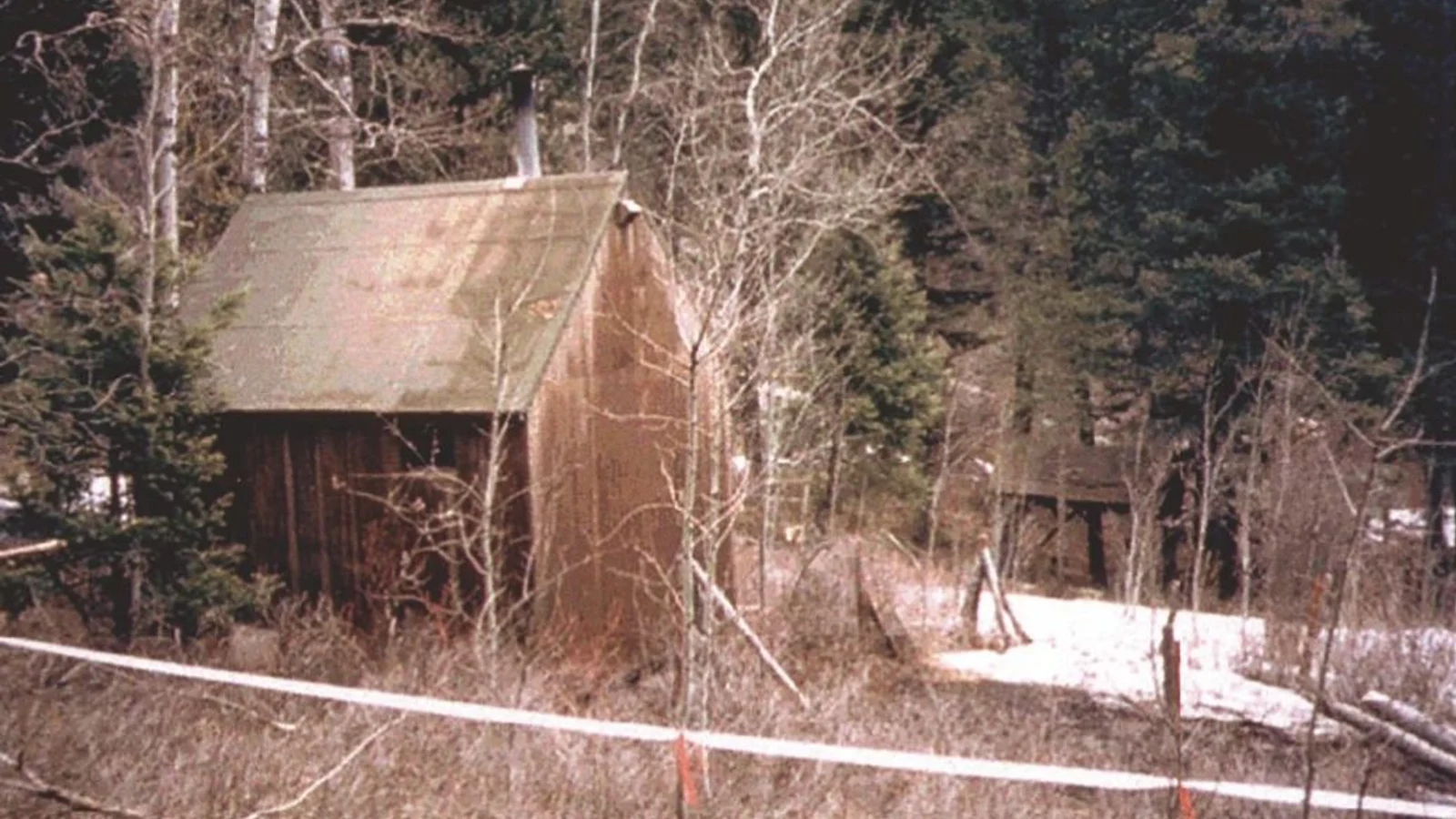
Investigators reached Kaczynski’s cabin near Lincoln, Montana, on April 3, 1996. Inside were writings and objects that changed the investigation from a proposed identification into a case supported by material recovered from the suspect’s own living space.
There were bomb components and a completed device, as well as extensive handwritten records. These were different kinds of evidence with different questions attached. Documents could describe conduct and reveal knowledge; objects could be examined for connections with devices from earlier attacks. Their location and the circumstances of recovery mattered too.
The existence of a notebook is not the same as verification of everything written in it. A claim about an attack still needs comparison with what actually happened. That is why the combination was so important: statements could be checked against events and physical findings, rather than left as an isolated claim of authorship.
The contrast with the manifesto is clear. The manifesto explained views to a public audience. Recovered records and objects could connect the person to acts. Sharing someone’s argument about society would never establish that another reader had committed those acts.
What the official photographs can show
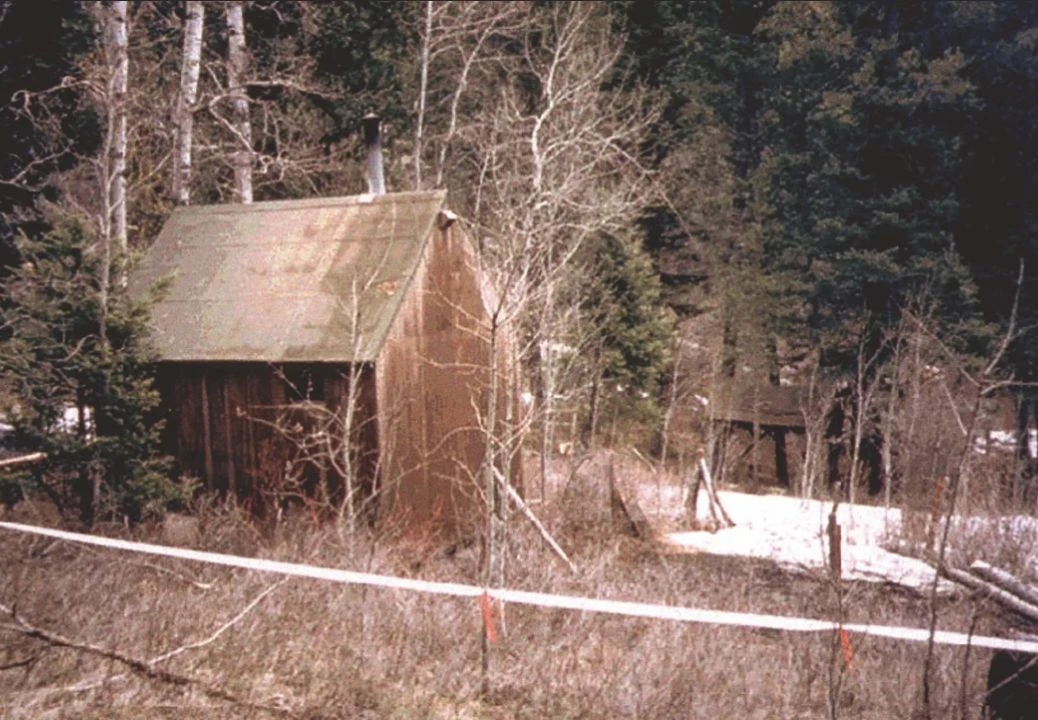
FBI archive photograph. This is the cabin near Lincoln, not an AI reconstruction or a set from a drama. It establishes what the building looked like; the photograph alone does not show the inventory of evidence recovered inside.
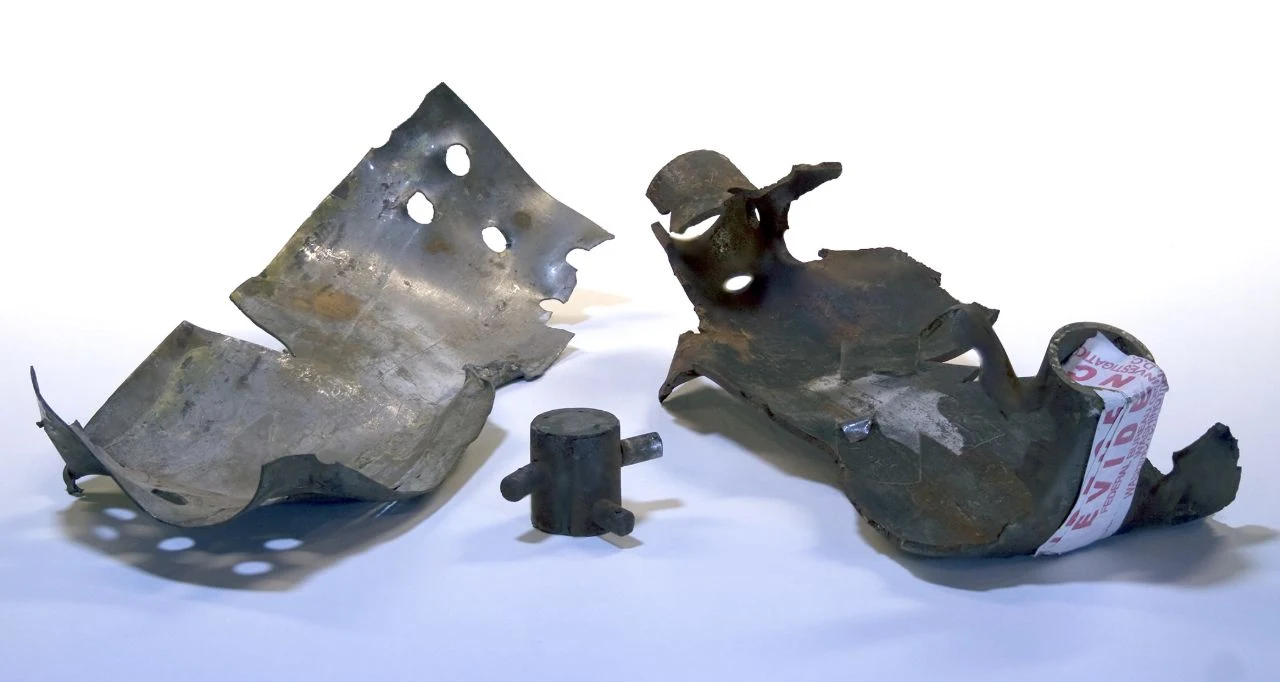
FBI artifact photograph. These fragments belong to the February 1987 Salt Lake City bombing. They illustrate the physical material investigators could preserve and examine. Their shape on a screen cannot establish a chemical composition or identify an author.
The distinction is useful when a documentary places a striking object beside an expert’s explanation. The image shows the object; the examination record supports the conclusion. A photograph of fragments and a conclusion about their residue are connected, but they are not the same evidence.

Three stages, three questions. Who might have written this? Is there a lawful basis to search? What do the recovered documents and objects establish? This diagram is our explanation of the sequence, not a reproduction of an FBI exhibit.
The laboratory criticism that belongs in this story
An arrest does not make every earlier forensic conclusion reliable. A Justice Department inspector general review examined concerns about an article describing devices attributed to the Unabomber and the explosives-residue work behind some of its statements.
The review found grounds for several concerns about examiner Terry Rudolph’s conclusions. It recommended a detailed review by a qualified residue examiner before that work was used further. It also did not find that publishing the article had itself been improper, and it expressly left other agencies’ examinations outside its scope.
Those findings deserve more than a passing mention. They show why a conclusion needs supporting tests and records, even in a case that later appears solved. But they do not establish that the cabin evidence was fabricated, that every examination failed or that the conviction was overturned. A criticism has to stay attached to the particular work the inspectors actually reviewed.
Why the case ended with a plea rather than a jury verdict
Kaczynski pleaded guilty on January 22, 1998, to 13 federal counts arising from the California and New Jersey prosecutions. The government withdrew its pursuit of the death penalty. He received life imprisonment.
Thirteen counts and sixteen bombing incidents are not contradictory totals. Counts are legal charges under particular statutes, rather than a simple count of every event in a campaign. They should not be used as interchangeable measurements of the harm.
Because the case ended in a plea, there was no jury verdict deciding guilt after a completed evidentiary trial. That limits claims that a jury heard the linguistic evidence and declared it scientifically conclusive. The plea resolved the criminal charges through a different process.
CBS Sunday Morning, April 3, 2016: Almanac, The Unabomber. This news retrospective looks back twenty years after the arrest. Watch it as a condensed account of the case, alongside the more detailed investigation and legal history here. It is a later television report, rather than a recording of a completed criminal trial.
The argument over lawyers and self-representation
The plea did not end disagreement about how the defense had been handled. Kaczynski objected to his lawyers’ use of mental-condition evidence and sought to represent himself. Competency to participate, the handling of that request and whether his plea was voluntary became disputed legal issues.
In 2001, the Ninth Circuit majority upheld the denial of his request to vacate the conviction. Judge Stephen Reinhardt dissented. The majority relied on the trial court’s finding that the request was being used to delay the proceedings. Reinhardt challenged that reading of the record and the refusal to allow self-representation. The disagreement mattered because a wrongful refusal could affect whether the resulting plea was voluntary.
That is a real legal controversy, rather than evidence that a court secretly rejected the whole prosecution. A dissent explains another judge’s reasoning; it does not replace the court’s judgment. Likewise, a competency assessment concerns participation in proceedings. It should not be casually rewritten as a jury determination of criminal responsibility at the time of each attack.
What later court proceedings meant for the victims
The recovered papers also became part of a dispute about property and restitution. A Ninth Circuit decision filed on July 21, 2005, described a restitution order of $15,026,000 and litigation over how seized property should be handled for the victims’ benefit.
The court sent the property dispute back for a timely, commercially reasonable plan aimed at maximizing the return to victims. It also appointed separate counsel to help present their interests. This was a ruling about property and compensation, rather than a reversal of the conviction.
The amount was an ordered obligation, not proof that victims received that sum. Nor is a figure in a 2005 opinion a statement of the balance outstanding today. Those distinctions matter when a later auction or museum display becomes the most visible part of a case.
The legal aftermath involved more than preserving a notorious person’s belongings. It concerned people owed restitution and the treatment of property with value partly created by criminal notoriety. That puts the familiar cabin photographs in another context: an object can be evidence, a historical artifact and part of a contested financial remedy at different times.
Three reactions from a public discussion
A June 2023 Reddit discussion shows how quickly this case turns into an argument about genius, family loyalty and sympathy. The following are three selected comments from one thread, not a survey of viewers or evidence about private family conversations. The original words are preserved.
Sympathy for a family facing an awful decision
A comment about David’s decision approves of his cooperation with investigators.
“he absolutely did the right thing turning his brother in.”
That is a moral judgment. The documented investigative contribution is more specific: David supplied information and writing that could be checked. We can discuss the difficulty of that choice without pretending to know every conversation behind it.
When the victims disappear from the conversation
Another comment about the victims challenges the attention given to the offender’s lost potential.
“his victims had potential and lives that were taken away”
The point is worth keeping in view while discussing unusual language clues. Scrutton, Mosser and Murray were people whose futures were taken from them. Survivors also lived with consequences. An interesting investigative method does not make those harms a footnote.
Concern for relatives without treating a thread as evidence
A third comment about the family’s predicament describes a reaction after watching a documentary.
“My heart breaks for his family and the decision his brother had to make”
That reaction can open a humane discussion about relatives who report someone they love. It cannot establish promises made to them, the terms of a plea agreement or a participant’s mental state. Those questions need records or attributed firsthand accounts beyond a viewer’s response.
What the Unabomber investigation does and does not teach us
The language evidence helped because it could be checked against known writing and other facts. The search mattered because it produced evidence with a different connection to the crimes. The legal outcome mattered because guilt was resolved through a plea, with later litigation over the process and property.
The lesson is practical when you watch another case unfold. Ask where a comparison text came from, what alternative writers were considered, what justified the search and what independently connected the suspect to the acts. A compelling phrase can begin that inquiry. It cannot do the work of every stage that follows.
You can ask about a documented language comparison or a court decision in this case. Do not send private case files, passports, bank details or personal records.
Ask about the Unabomber evidence